Your page is growing, the comments never stop, and someone has to deal with them. So you face the classic decision: hire people, or hand the job to software.
Most comparisons you will read are written by someone selling one of the two options. We sell AI moderation, so let us be upfront about that — and then give you the honest version anyway.
Because the honest version is not “AI wins.” It is more useful than that: humans and AI are good at completely different parts of this job, and the brands that get it right use both.
- True 24/7 human coverage needs a rota of four to five people, not one hire — a week has 168 hours and a full-timer covers about 40.
- The visible salary is only part of the cost of a human team; benefits, training, tools, management time and turnover add a large margin on top.
- Humans are genuinely better at judgement, tone, de-escalation and community building — AI does not replace that.
- AI is better at speed, volume, consistency, working through the night, and reading every language your customers write in.
- The real answer for most growing brands is hybrid: AI reads and triages everything, humans handle the conversations that matter.
- Match the model to your size — a quiet office-hours page has different needs than a multi-channel brand in a regulated industry.
What does hiring a social media team actually cost?
Far more than the salary line. A single full-time social media manager typically costs a business roughly $3,000 to $6,000 a month in the US once benefits and overheads are included, and meaningfully less in other markets. But one person only covers about 40 of the 168 hours in a week.
That last number is the one most owners miss. Comments do not arrive on a schedule, and the gap between “posted” and “seen by a human” is where the damage happens.
Break the real cost of a human team into its parts and it looks like this.
Salaries and benefits
The base salary is the visible number. On top of it sit payroll taxes, insurance or benefits, paid leave, equipment and software seats.
A common rule of thumb is that a full-time employee costs the business 1.25 to 1.4 times their salary. If you want senior judgement rather than a junior watching a feed, the number climbs again.
Training and ramp-up
A new moderator is not productive on day one. They need to learn your products, your moderation policy, your tone of voice, and what counts as a serious signal in your industry.
That ramp-up usually takes weeks. During it you are paying full price for partial coverage, and a manager is spending their own hours supervising.
Turnover — the cost nobody budgets
Comment moderation is repetitive and sometimes genuinely unpleasant work. People burn out, get promoted, or leave.
Every departure restarts the cycle: recruiting, interviewing, training, ramp-up. The knowledge of your audience — who the regulars are, which complaints are patterns — often walks out the door with them.
Nights, weekends and holidays
Here is the multiplication that changes the whole calculation. Covering 168 hours a week with humans, allowing for leave and days off, takes a rota of roughly four to five full-time people.
At that point you are not hiring a moderator. You are running a small around-the-clock department, complete with shift planning, handovers and a supervisor.
What are humans genuinely better at?
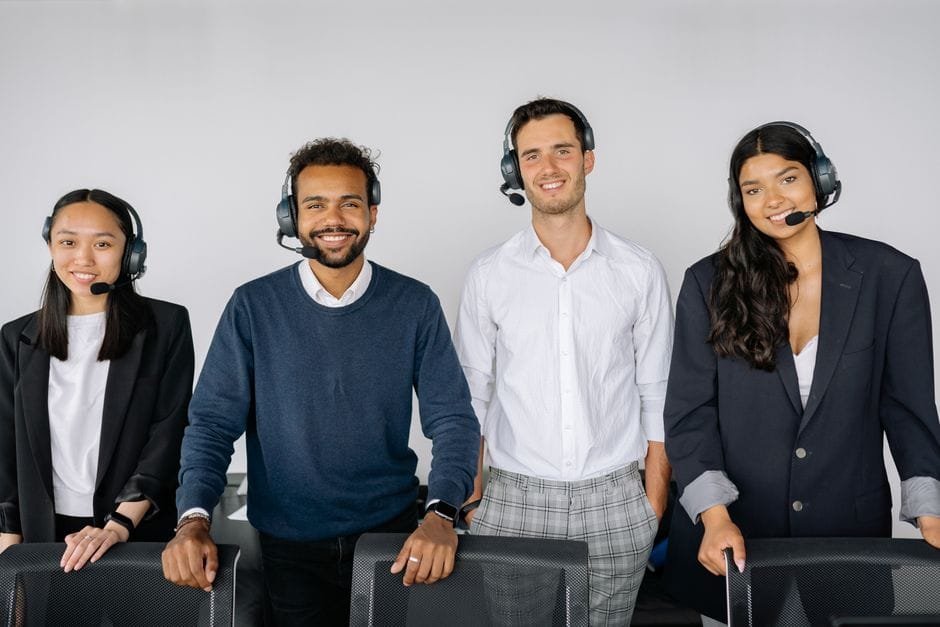
Humans win at judgement, empathy and relationships. A good community manager reads the mood of a thread, calms an angry customer with the right words, spots when a joke will land and when it will not, and builds the kind of regular audience that no tool can create. None of that should be automated.
It is worth spelling this out, because “AI vs humans” framing usually pretends one side does everything.
Nuanced judgement. Is this complaint fair? Is this customer a long-term regular having a bad day? Should we bend a policy this once? These are decisions with context and consequences, and a person with authority should make them.
Tone and de-escalation. A well-written human reply to a public complaint is some of the best marketing a brand can get. A templated reply that misses the emotional register can make things worse.
Community building. Welcoming new followers by name, running conversations, remembering context from last month — this is relationship work. It is the part of the job humans usually enjoy, and the part that grows a brand.
Accountability. When something goes wrong in a regulated industry, “a person reviewed and approved this” carries weight that “the software decided” does not.
What is AI moderation better at?
AI wins at speed, volume, consistency and coverage. It reads every comment within seconds of posting, at 3am as reliably as 3pm, across every channel at once, in any language, and applies your rules the same way on comment one and comment ten thousand. Humans cannot sustain any of those four things.
Again, the specifics matter more than the slogan.
Speed. A scam link or an abusive reply does its damage while it sits public. AI moderation acts in seconds; a human sees it at the next check, which might be hours later.
Volume. When a post takes off, comments can jump from twenty a day to hundreds an hour. A human queue collapses; software does not notice the difference. That surge capacity is exactly what a comment crisis demands.
Consistency. Humans get tired, distracted and inconsistent — the same comment gets hidden by one moderator and ignored by another. AI applies the policy identically every time, which also makes your decisions defensible later.
Language. Your customers write in whatever language they think in, and often mix two in one sentence. Most teams quietly skip what they cannot read. AI reads all of it, which is where the worst comments usually hide.
The unglamorous 80%. Most of a moderation queue is spam, repeat questions and obvious junk. Paying a human salary to clear it is a poor use of a person — and a fast route to burnout.

A worked cost comparison
Exact numbers depend on your market, but the shape of the comparison is the same everywhere. These are typical ranges, not quotes.
| Option | Typical monthly cost (USD) | Actual coverage |
|---|---|---|
| One in-house hire | $3,000–6,000 fully loaded (US market; less elsewhere) | ~40 of 168 hours, office days only, the languages they speak |
| 24/7 in-house rota (4–5 people) | $12,000–25,000+ | All hours, but with handover gaps, sick days and turnover risk |
| Agency retainer | $1,000–5,000 | Scoped hours and channels, “within X hours” response, junior staff on the queue |
| AI moderation + your own oversight | A few hundred to low thousands, tiered by volume | Every comment, every channel, every language, in seconds, around the clock |
| Hybrid: AI triage + one human | One salary + the AI subscription | Full 24/7 machine coverage plus human judgement on what matters |
Read the last two rows together and the pattern is clear. The AI does not replace your person — it replaces the rota you would otherwise need around them.
One good person plus AI triage typically delivers more real coverage than three people without it, at well under half the cost of a 24/7 human operation.
Why is the hybrid model the real answer?
Because the two halves of the job are different jobs. Reading ten thousand comments is a machine task; deciding how to answer a furious long-term customer is a human one. Hybrid moderation gives each job to the side that is actually good at it: AI reads and triages everything, humans handle the conversations that matter.
In practice the flow looks like this. Every comment and message is read by the AI the moment it lands, in any language.
Spam and abuse are dealt with in seconds, before your customers see them. Routine questions get your own approved answers. And genuine complaints, buying signals and anything sensitive are flagged and pushed to a person.
Your human — whether that is you, a hire, or your agency — stops scrolling through noise. They open a short queue of things that genuinely need judgement, with the full context attached.
Nothing important gets buried, and nothing public depends on a machine’s opinion alone. That last point matters most in regulated industries, where a person must stay accountable for every action.
It also fixes the maths. One person doing the human half of the job during office hours, with AI covering all 168 hours of the machine half, costs a fraction of a rota and misses far less. The cost of missing things is real — one bad comment left sitting in public can quietly cost you customers who never tell you why they left.

Which model fits your business size?
There is no single right answer, but there is usually an obvious one once you look at your volume, hours and risk. Use this as the short version.
Solo founder or very small page
If you get a handful of comments a day and they all arrive in one language during hours you are awake, you can handle them yourself with the platform’s built-in tools.
Revisit the moment you start running ads or miss your first buying question overnight. Those are the early signs a brand has outgrown manual moderation.
Growing brand, one or two channels
This is where the pain usually starts: enough volume that comments go unanswered, not enough to justify a hire whose whole job is watching a feed.
AI moderation with you approving the important calls is the natural fit. You get round-the-clock triage without adding headcount, and your own time goes only to the flagged items.
Established brand across Facebook, Instagram and WhatsApp
Multiple channels multiply the problem, because every channel is another tab someone has to watch. Multi-channel moderation in one dashboard, with AI triage underneath and your team or agency on top, beats hiring another person per channel.
If you already have a social media manager you like, keep them. Their job improves — less janitorial work, more of the community work you actually hired them for.
Regulated industry — pharma, finance, healthcare
Here the question is not cost but risk. A missed comment can be a compliance event, and “we check the page twice a day” does not survive an audit.
You need every comment read, sensitive signals escalated within minutes, a human accountable for every action, and a timestamped audit trail. That combination is only realistic with AI doing the reading and humans doing the deciding.
How to move to a hybrid model without breaking anything
You do not have to fire anyone or flip a switch overnight. A sensible transition looks like this.
- Write down your rules first. What gets hidden, what gets answered, what gets escalated, and who has the final say. If it only exists in someone’s head, start with a one-page moderation policy.
- Measure your baseline for a week. Count comments per day, note when they arrive, and record how long they sit before someone acts. This number is what you will improve.
- Turn on AI in review-only mode. Let it read and classify everything but action nothing. Compare its calls with what your team would have done.
- Automate the safe categories. Start with obvious spam and scam links — the actions nobody will ever dispute. Keep everything else as human-approved.
- Route flagged items to a named person. Complaints, buying questions and sensitive signals should land with someone whose job is to respond, with a target response time.
- Expand automation as trust builds. Add abuse hiding and approved answers to routine questions once the review period shows the calls are right.
- Review the numbers monthly. Time-to-action, items escalated, anything the AI got wrong. Tighten the rules as your audience and products change.
Most teams are surprised by step two — not by how many comments there are, but by how long the worst ones sat in public before anyone saw them.

Frequently Asked Questions
Can AI moderation fully replace a social media manager?
No, and it should not try. AI replaces the reading, sorting and janitorial work — spam, abuse, repeat questions — not the judgement, tone and community building a good manager provides. The realistic outcome is that one person does the work that used to need a team.
How much does AI comment moderation cost compared to hiring?
AI moderation is typically priced as a monthly subscription tiered by comment volume, ranging from a few hundred dollars to low thousands. A single full-time hire usually costs more per month once benefits and overheads are counted, and covers only about a quarter of the week’s hours.
Is a human team better at understanding context and sarcasm?
For genuinely ambiguous cases, yes — which is exactly why those cases should be flagged to a person rather than auto-actioned. Modern AI reads context far better than the old keyword filters, but a well-designed system still routes anything uncertain to human review instead of guessing.
What happens to comments in languages my team does not speak?
With a human-only setup, they usually get skipped — and that is where abuse, scams and serious complaints hide. AI moderation reads and classifies comments in any language, so a complaint in Bangla, Arabic or Spanish gets the same treatment as one in English.
We already use an agency. Does AI moderation still help?
Yes, and the two work well together. The agency keeps doing content and community work while the AI covers the hours outside their scope — nights, weekends, and the surge when a post takes off. Many agencies run AI triage underneath their own service for exactly this reason.
Is AI moderation safe for a regulated industry like pharma?
It is safer than manual checking, provided a human stays in the approval loop. Every comment is read within seconds, sensitive signals such as adverse event reports are escalated to a named person, and every action is logged with a timestamp — which is what an audit actually asks for.
How long does it take to set up AI moderation?
Connecting pages and switching on a review-only mode is typically a matter of days, not months. The longer part is tuning the rules to your brand during the first few weeks, which is why a staged rollout — observe first, automate the safe categories, then expand — works best.
The bottom line
If your page is small and quiet, do it yourself. If your budget is large and your volume justifies a genuine 24/7 department, a human rota can work — at a price most businesses will not pay.
For everyone in between, the honest answer is not AI or humans. It is AI doing what machines do well — reading everything, instantly, in every language, around the clock — and humans doing what only humans can: judgement, warmth, and the conversations that keep customers.
Buy coverage from software. Buy judgement from people. Stop paying either one to do the other’s job.
See what hybrid moderation looks like on your own pages before you decide anything. Book a free demo — no obligation, and you keep your existing team and agency. For the full picture of how modern moderation works, start with the complete guide to 24/7 social media moderation.